Christmas is God’s greatest surprise:
God steps onto the dusty and rugged road of our human journey.
No longer distant—no longer mediated only by fire, cloud, angel, or law—
God walks with us now in flesh and vulnerability,
as companion, as Child, as Presence.

For this mystery, the heavens themselves cannot remain silent:
Gloria in excelsis Deo.

And yet, so often, we do not walk toward or with God.
We turn away.
We wander—burdened, disillusioned, heavy-hearted—
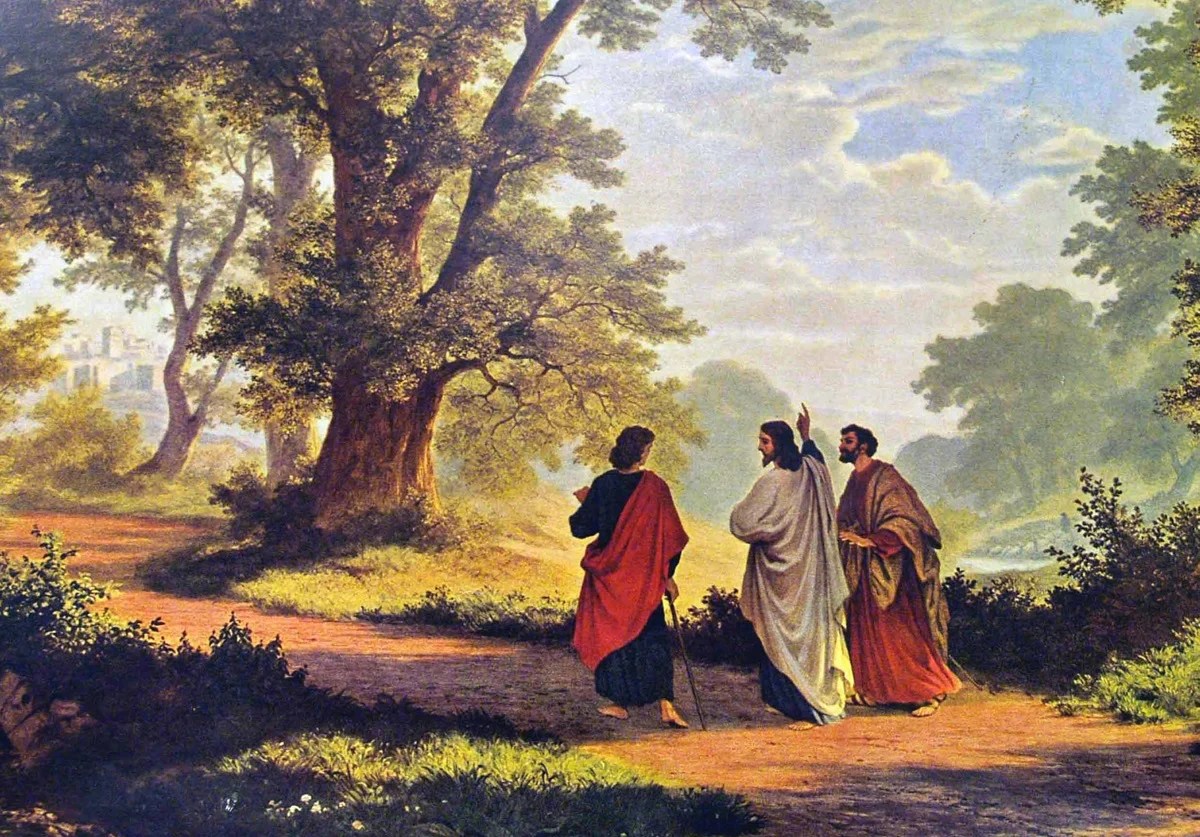
like the disciples on the road to Emmaus,
walking away from hope while speaking endlessly about loss.

Still, the grace of Christmas is this:
the Christ Child does not wait for us at the destination.
He joins us on the road.
He walks with us in our confusion, listens to our grief,
and gently re-orients our steps—
from despair back toward God.

What does it feel like to walk toward and with God?

We listen to the quiet testimonies of Mary and Joseph,
the shepherds startled by glory,
and the Magi who trusted a fragile star.
Their stories echo the Emmaus cry:
“Did not our hearts burn within us?”

Walking toward God feels like this:
1. A deep and steady peace, even when life unfolds in exile and uncertainty.
2. Faith, hope, and love stretch wider through dreams received and trusted.
3. An inner harmony—a settled knowing: this is where I belong.
4. Energy for generous action: finding space where life can be born.
5. A clarity of direction, the courage to follow a star not fully understood.
6. A widening sense of connection—to God, to others, to creation, to oneself.
7. Gratitude that breaks into song: Gloria… even in the night.
8. Freedom to release fear and control, especially when power demands compliance.
9. A deep authenticity—being alive, aligned, and faithful to one’s deepest truth.
10. A movement toward community, relationship, and shared gift-giving along the way.

But what does it feel like to walk away from God?

Here again, the Emmaus disciples speak—
and King Herod stands as a warning.
Personal, national, regional, and global choices reveal
how hearts and systems drift from God.

Walking away feels like this:
1. A thick darkness—heaviness that settles over refugees and forgotten peoples.
2. Faith thinning, hope fraying, love growing cautious.
3. Isolation disguised as strength: “we come first.”
4. Inner agitation mirrored in oppressive and apartheid-like regimes.
5. Confusion among the wealthy, despite abundance.
6. A cry of exhaustion: When will war and genocide end?
7. Fear tightening into self-doubt and blame.
8. Power collapsing inward into self-absorption and control.
9. Weariness toward goodness—especially when creation itself cries out.
10. A slow fragmentation, a sense of dying inside, even within our Caribbean home.

And yet—this is the final word of Christmas:
Light enters precisely here.

Into our darkness,
the Child born for us walks again beside us—
listening, speaking, breaking bread,
warming hearts along the road.

Like the Emmaus disciples,
we discover that God was with us all along.

Today, twenty-first-century Caribbean disciples
are entrusted with this hope:
to proclaim that Christ accompanies us still,
that the journey toward God remains open,
and that Christ—our hope—
does not disappoint.
 Beloved Reflections