We left Ponte de Lima
by crossing the old stone bridge.
The rising sun stretched across the sky,
while morning coolness settled over our bodies.
Below us, the Rio Lima flowed peacefully,
carrying yesterday’s weariness away.
Its waters reminded me of the deeper journey:
to follow the river of grace towards its Source.
Some companions remained behind,
their bodies asking for a day’s rest.
We carried them across the bridge in our hearts,
learning that community walks even when some must pause.
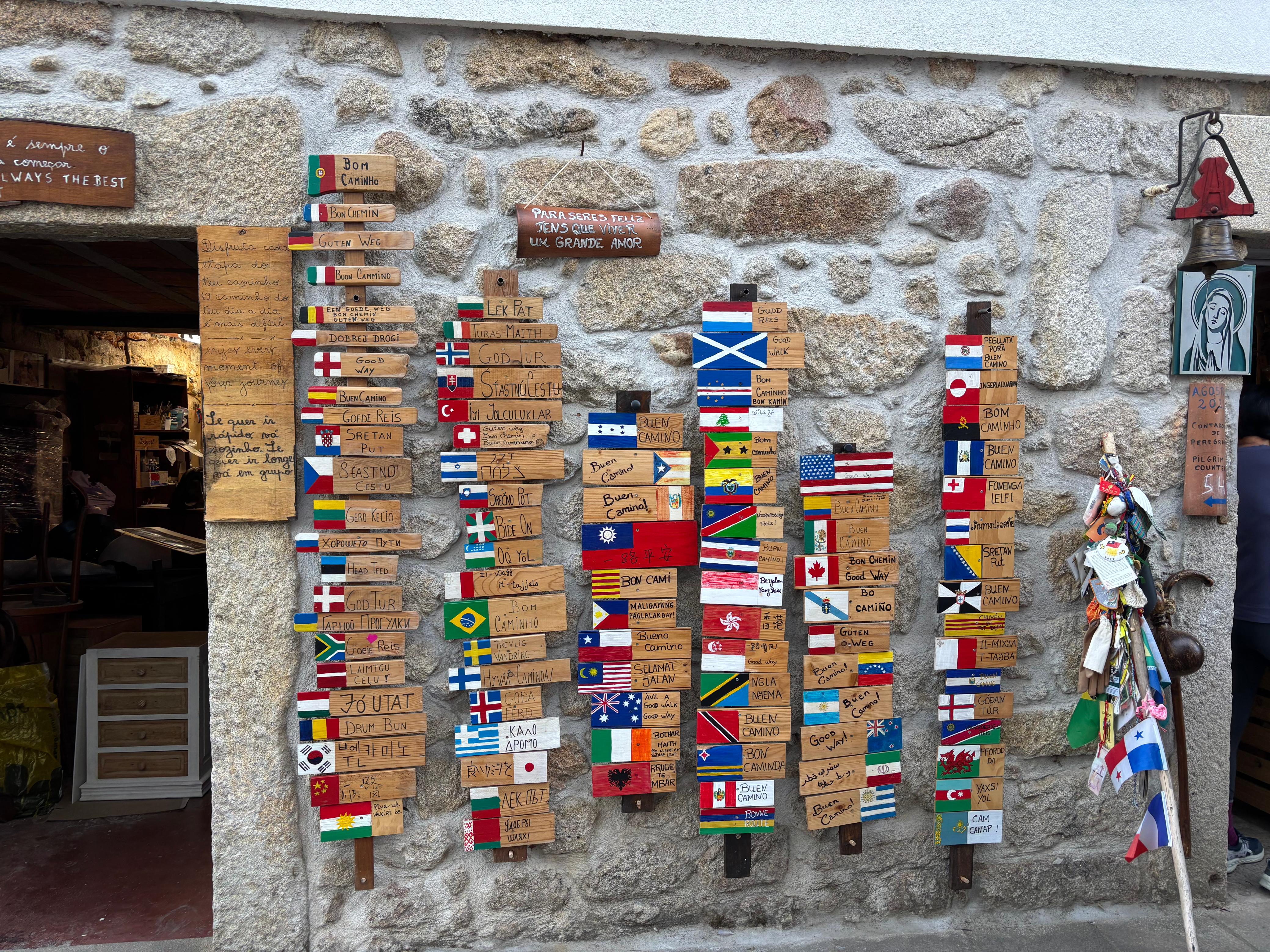
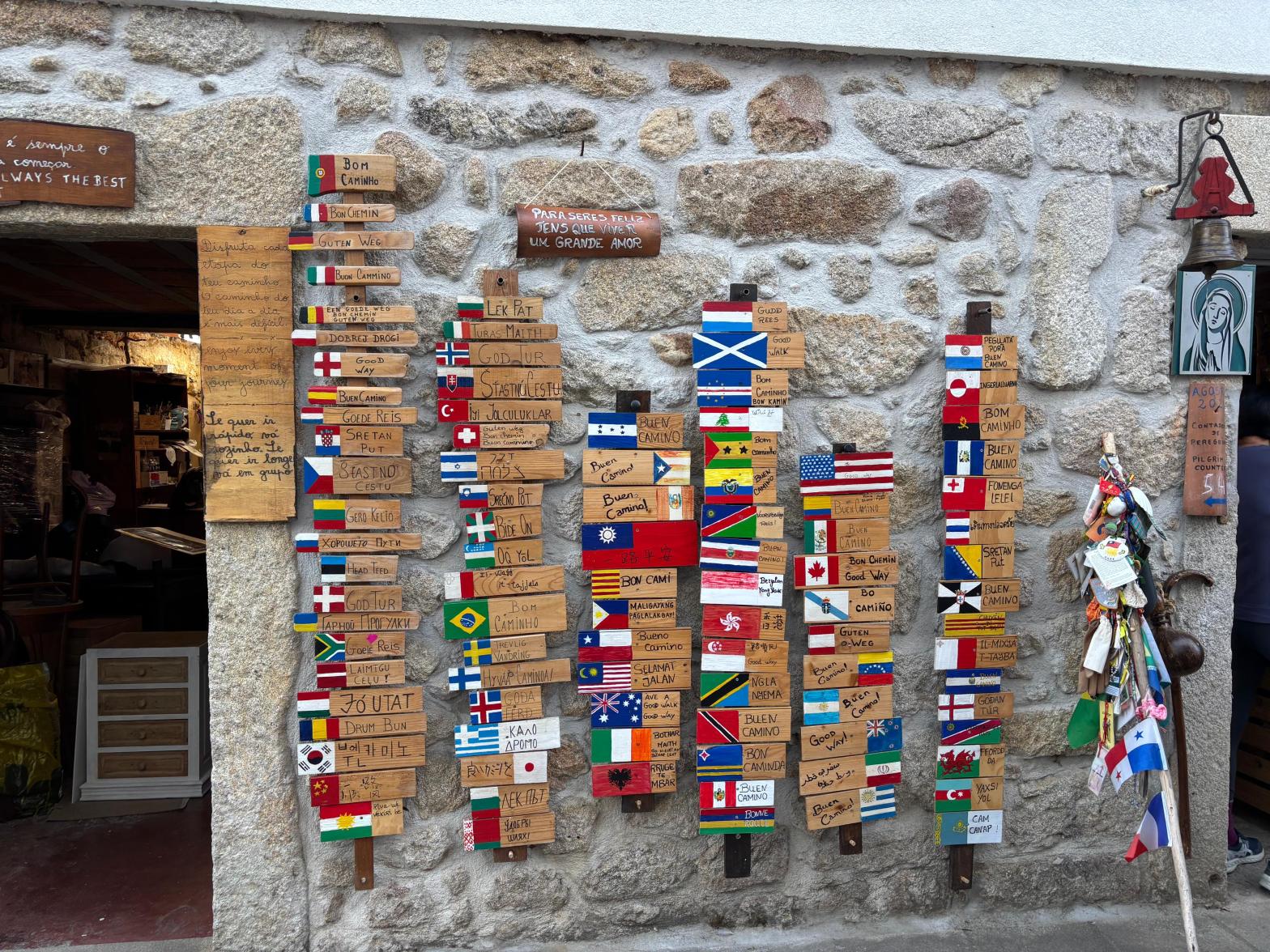
At our first stop, we presented our passports
to a cheerful guardian of the Camino.
On his chalkboard, we erased yesterday’s number
and counted ourselves among today’s pilgrims.
Eleven thousand, three hundred and thirty-eight—another company of feet passing by his door.
Then he rang a bell loud enough to awaken the valley
and sent us laughing along the Way.
We began with the Sorrowful Mysteries,
walking beside Christ through His Passion.
With each mystery, we remembered people
whose suffering continues throughout the world.
Jesus was not distant from their anguish.
He stood among the betrayed and condemned,
the tortured, burdened, and crucified,
bearing their wounds within His own.
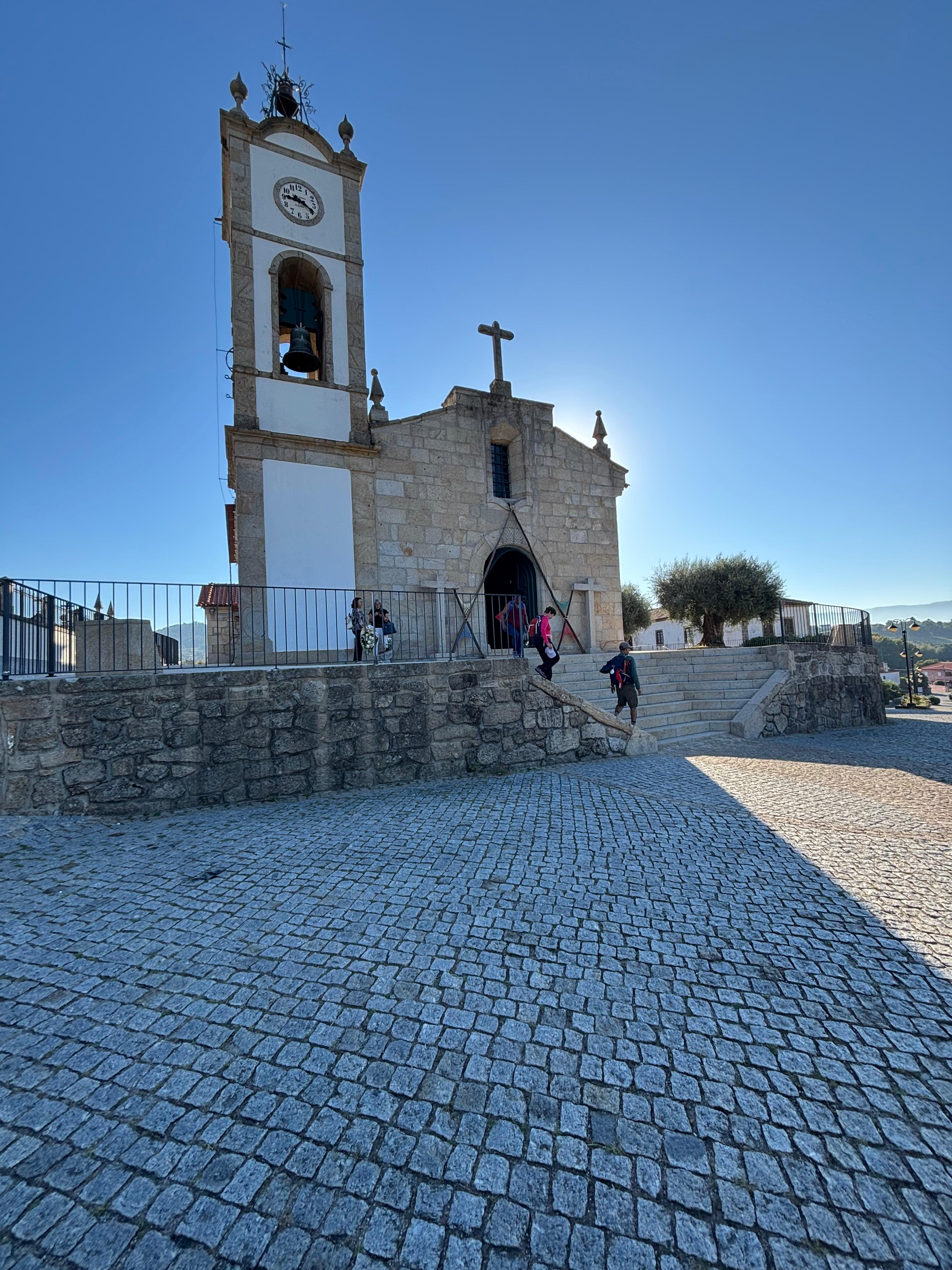
The first open church welcomed us.
We entered gratefully and sat in silence,
letting our hurried thoughts settle
before the God who had been walking with us.
As we departed, we noticed
that the church was preparing for a funeral.
One pilgrim quietly observed,
“There are opportunities even in death.”
Perhaps every ending opens a hidden door.
Perhaps grief, when held in God’s presence,
can lead us into deeper communion
with what neither death nor distance can destroy.
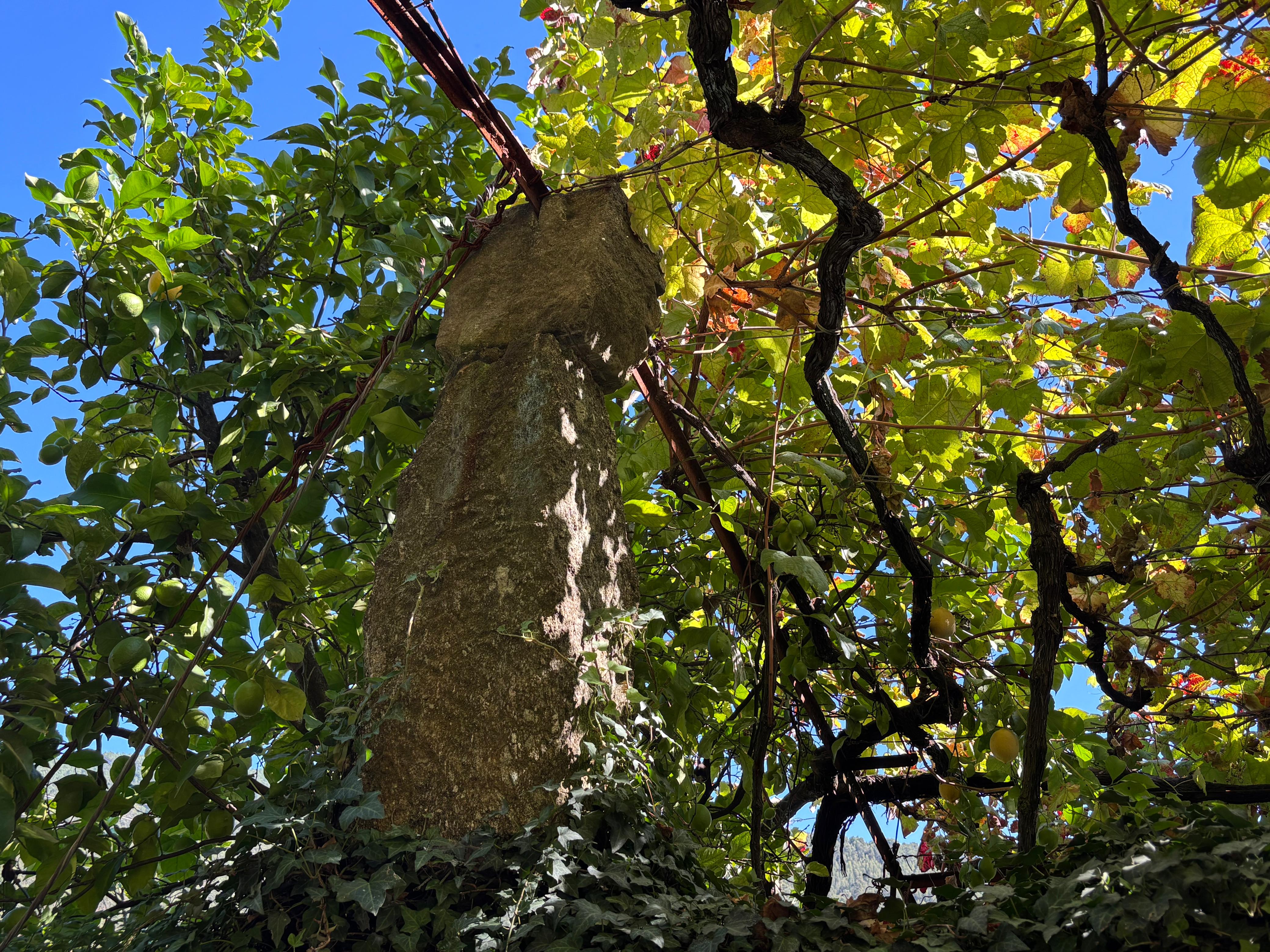
Farther along, we noticed ripe lemons
seemingly growing from a grapevine.
Only when we stopped and looked carefully
did the mystery reveal itself.
A lemon tree stood beside the vine.
Its branches had reached into the neighbouring leaves,
allowing two different plants to share
what at first appeared to be a single life.
“Bloom where you are planted,” someone said.
Yet the branches seemed to promise more:
grow beyond the borders assigned to you
and bear fruit within another’s life.
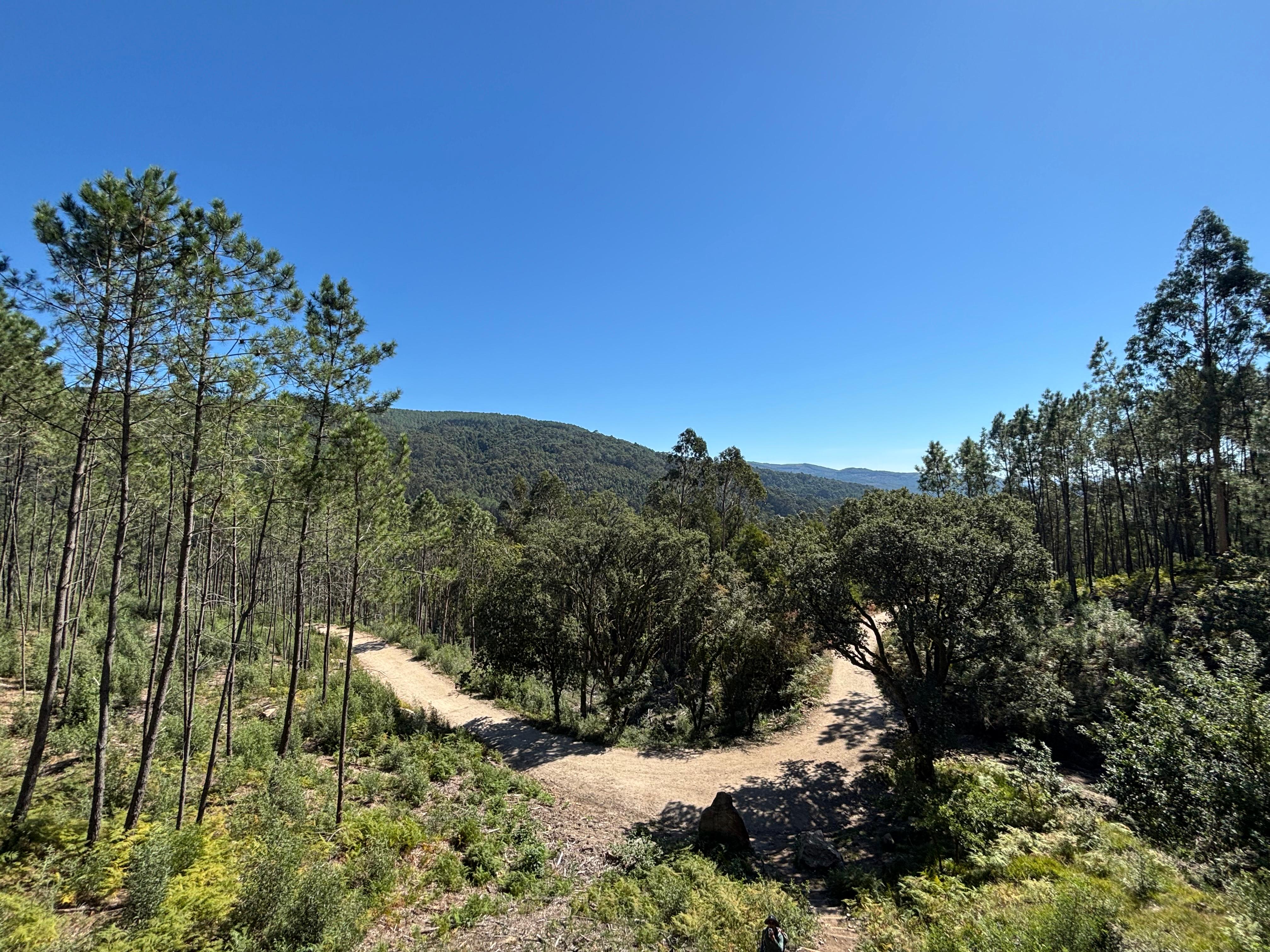
Then the road divided like a letter Y,
one pathway turning left, the other right.
The fork became a mirror of the choices
forming within the cave of my heart.
One path followed the voice of fear—
towards withdrawal, desolation and isolation,
towards the safety of my familiar shell
when the journey became difficult.
The other followed the voice of love—
towards consolation and community,
towards participation, availability
and the discovery of God in all things.
I could not choose once for the whole Camino.
The crossroads would appear again and again,
asking which voice I would follow
in each conversation and in each discomfort.
As we walked, another pilgrim and I spoke
about learning to inhabit the present moment.
The Camino was not a race to finish
or a distance to be conquered quickly.
God waited within what our senses perceived:
the colours before our eyes,
the sounds entering our ears,
the earth, wind, food and sweat upon our bodies.
Hurrying towards the destination
could make us absent from the pilgrimage.
The grace we were seeking in Santiago
might already be beside us on the road.
In a nearby yard, we saw a donkey.
One pilgrim called, and it approached at once,
patiently accepting her touch and attention
and calmly posing for photographs.
When she turned and walked away,
the donkey let out a piercing bray.
It sounded like a lament
for a presence that had come and gone.
I wondered how often creation calls to us,
delighted when we pause to draw near,
then lamenting when we take our pictures
and continue without truly remaining.
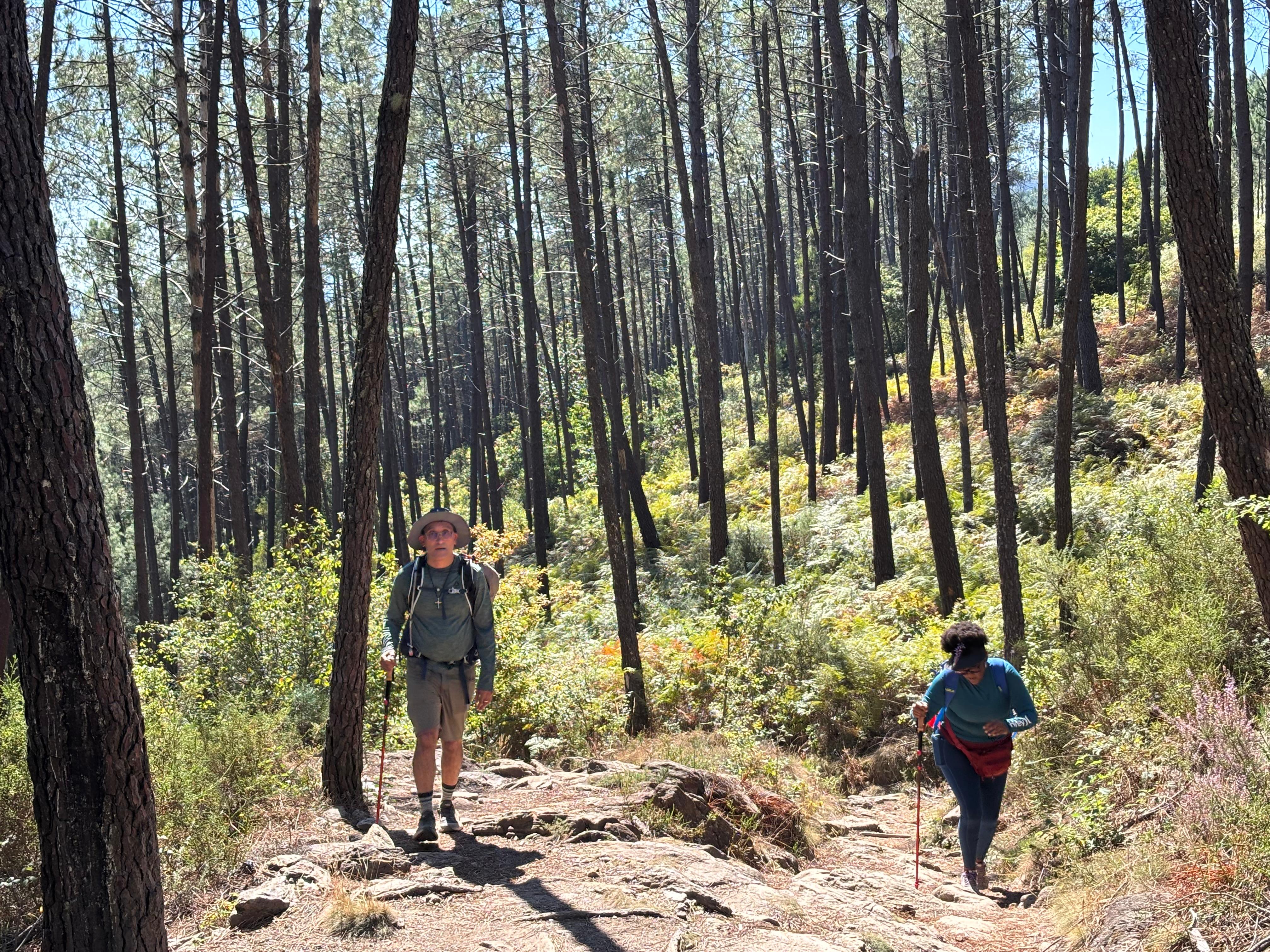
The path towards São Pedro de Rubiães
became our steepest climb so far.
Cobblestones, loose rocks and slippery ground
turned every upward step into labour.
The ascent felt like Calvary.
Yet cool winds visited us intermittently,
and our small group stopped often
to rest, drink, and recover our strength.
I remembered that even Jesus’ road to Calvary
was interrupted by human encounters:
Simon carrying the weight of the Cross
and the women of Jerusalem drawing near.
Holy pauses did not remove His suffering,
but they infused it with compassion.
They revealed that even on the road to death,
no one should suffer alone.
My thoughts returned to my African ancestors,
confined in the holds of slave ships.
Were they granted even brief pauses on deck
to breathe fresh air and see the sky?
The pauses freely available to me
became gifts I could no longer overlook.
Each rest beneath the trees carried the memory
of those whose bodies were denied relief.
At day’s end, we told another pilgrim
about the sights and sounds we had experienced.
She had travelled the same route
but remembered seeing or hearing none of them.
Her group had walked faster.
Ours had moved slowly enough to notice.
The difference was not the road itself,
but the attention we offered to it.
“Lord, teach me the discipline of pausing—
to receive the journey while I am living it,
to notice grace before it passes,
and to listen before I respond.”
I needed that grace when anger rose in me
over a change to our room arrangements.
I felt overlooked because no one
had communicated the new information.
Two responses stood before me
like the divided road we had encountered:
an accusation sharpened by anger,
or a question seeking understanding.
I paused, then chose the question:
“Can you explain why the change
in the room arrangements
was not communicated to me?”
The circumstances had not changed,
but the pause changed how I approached them.
It gave the voice of love some room
before the voice of anger spoke for me.
I also began the day unsure
about a new person joining our group.
Concern about how they would fit in
could have led me to remain guarded.
Instead, the unease moved me towards consolation.
I took the initiative to offer a welcome,
helping the stranger find a place
within the community of pilgrims.
“Still, Lord, keep watch over my intentions.
My ego knows how to dress itself
in the language of service
and disguise its desires as Your work.”
“Purify the good I believe I am doing.
Teach me to serve without possessing,
to accompany without controlling,
and to make room without seeking praise.”
As evening gathered around São Pedro de Rubiães,
I looked back on the steep ascent.
The treasure of the day was found
in the moments when we stopped.
A pause allowed me to see.
A pause allowed me to listen.
A pause allowed anger to become a question
and fear to become a welcome.
Tomorrow the Camino will call us forward,
but tonight I ask for a slower heart:
one that does not hurry beyond the grace
God has placed in the present moment.