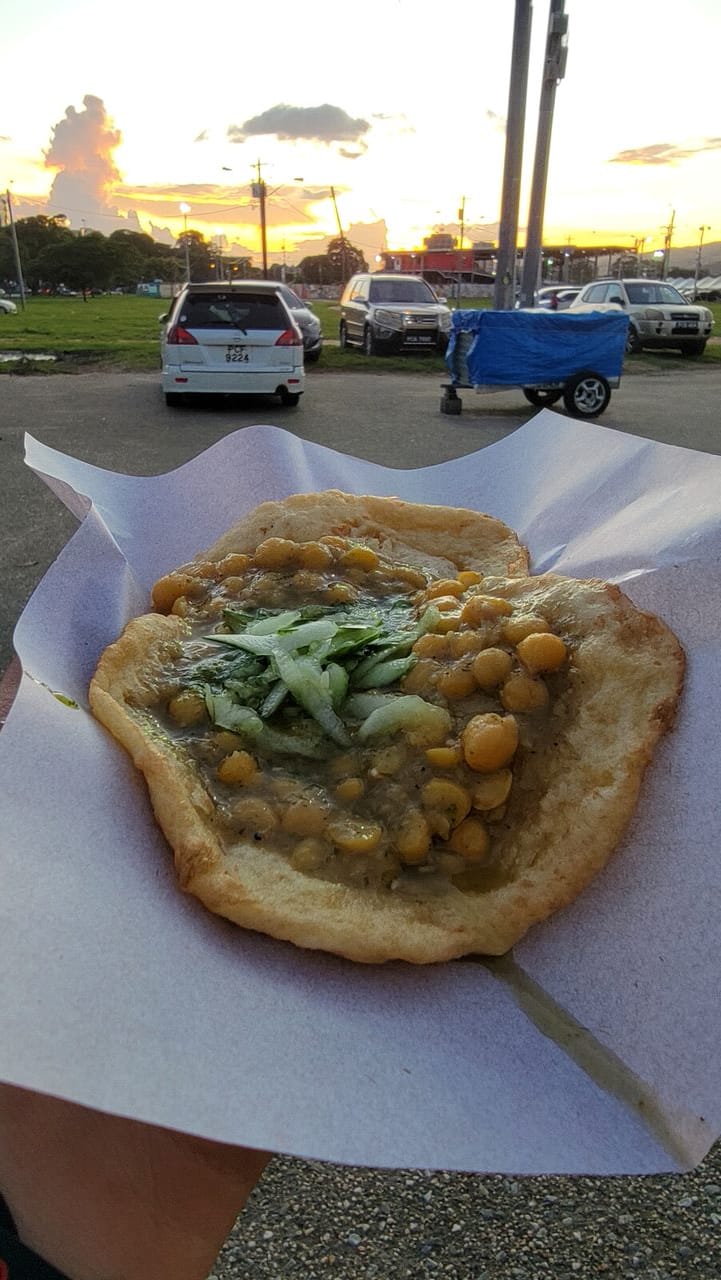
To what can we liken the Eucharistic celebration to the Catholic Tradition?
In the Caribbean nation of Trinidad and Tobago, there is a culinary delight commonly known as ‘double. ‘ It is a typical street food consisting of curried chickpeas on two fried flatbreads. It is usually eaten for breakfast. However, the communal, participatory, and rustic street space where the doubles are consumed signifies the nation’s cultural identity, engaging many persons in their preparation and consumption process.
Early morning vendors awaken and meticulously prepare the doubles, store them in igloos, and transport them to a street corner or sidewalk from as early as five o’clock in the morning. Establishing a tent under which it is sold or in an open van back, buyers form long lines to purchase. While lines move at a snail’s pace, conversations on the latest news erupt, creating a shared experience of anticipation and connection. This shared experience, along with the delicious food, is part of what makes the ‘double’ tradition so special.
Similarly, the Eucharist is a communal act and gift from Jesus Christ that celebrates his presence. It’s not simply the eating of his body that communicates its identity. It is the whole ritual of preparation and partaking. After the meal is prepared, the assembly gathers and engages in a conversation with the Word of God in scriptures, homilies, and the universal prayer before partaking and eating the body of Christ with hands.
As satisfied buyers depart inspired by the conversation and eating to embark on the day’s mission, so too, Eucharistic partakers depart energised for the mission that lies ahead. The Eucharist, like the ‘double’ tradition, is not just a meal but a source of inspiration and strength for the journey ahead.
 Beloved Reflections
True. Should be.
Yvonne Farmer
LikeLike