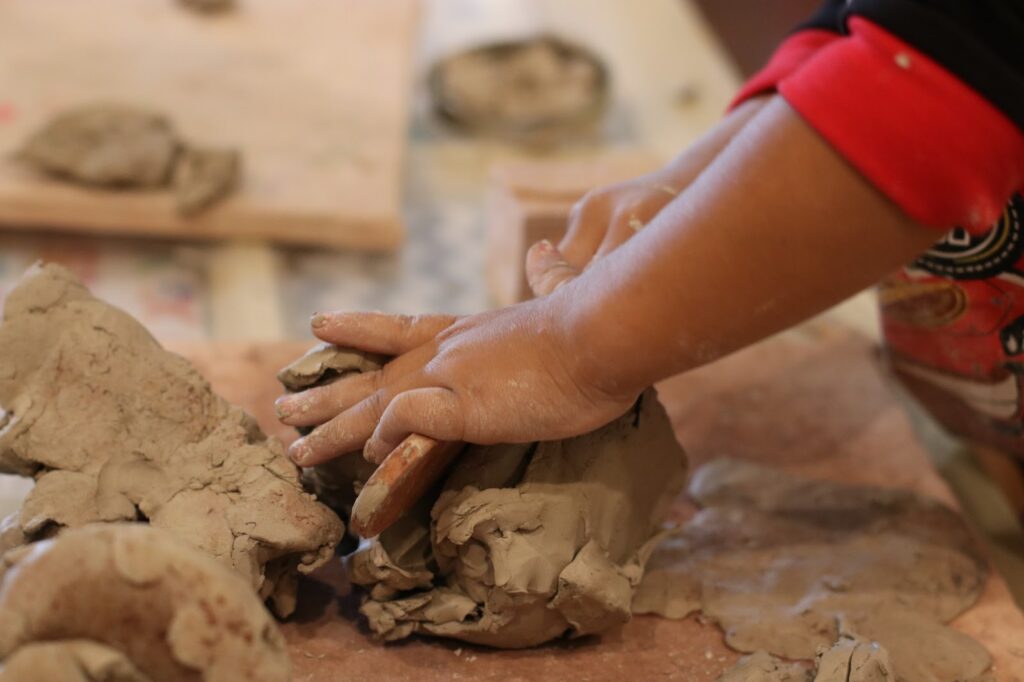
“Our hope has a name – Jesus – God who was not disgusted by our clay, and who, instead of saving us from the clay, became clay for us” (Pope Francis, 2025).
How do we perceive Christ amidst the clay – the imperfections, woundedness, incompleteness, and brokenness – of the world and our humanity? When we witness the inhumanity and injustices inflicted upon our sisters and brothers in Palestine, Sudan, Haiti, and Venezuela, to name just a few, where is Christ in this fractured, arid, and crumbling clay?
Here are several key elements to integrate into our spirituality. Envision God gazing intently upon us and the world, amidst the chaos of sin.
First, as you envision God gazing at you and the world, imagine God embracing your clay and the clay of the world, inviting you to do the same. Let the Gospel narratives guide us in understanding how God becomes the fractured, arid, and crumbling clay of our lives. Consider how this affects Him. “Jesus wept!” (John 11:35)
Second, as you envision God gazing at you and the world, He invites you to pray for the desire to find “consolation” amidst the desolate poverty of the world’s clay. Recall Jesus’ words to His disciples in the Garden of Gethsemane: “Watch and pray that you may not enter into temptation. The spirit indeed is willing, but the flesh is weak” (Matthew 26:36).
Third, as you envision God gazing at you and the world, God encourages you to dedicate quality time to prayer, beseeching the transformation and healing of our blindness so that we may recognise Christ’s presence.
Fourth, as you envision God gazing at you and the world, listen for God’s voice, inviting you to become a “pilgrim of hope” by witnessing to the world that the resurrection is the final chapter in everyone’s story.
 Beloved Reflections
Thank you for your reflection. Truly appreciate it. God’s blessings to you Fr. Don
LikeLike