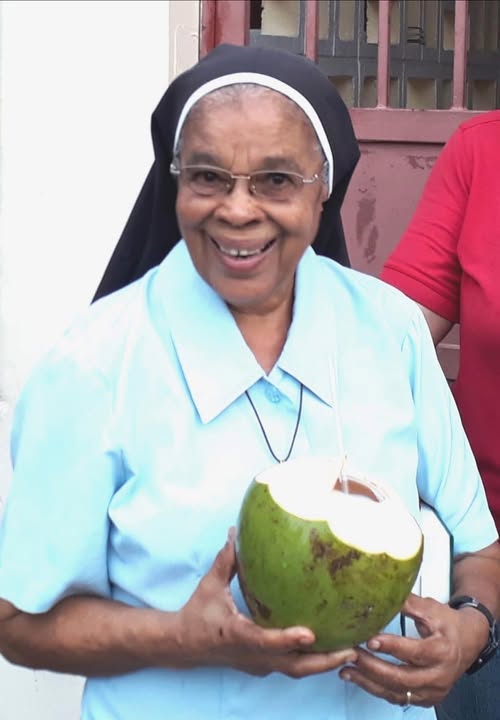
The life and ministry of Sr. Monique Monquette can perhaps best be understood through two timeless songs: “Many Rivers to Cross” by Jimmy Cliff and “Bridge over Troubled Water” by Simon & Garfunkel. Both songs speak about struggle, transition, uncertainty, and the grace of finding someone who walks with us through difficult seasons of life.
For countless students, priests, families, and vulnerable persons in Trinidad and Tobago and across the Caribbean, Sr. Monique became exactly that, a bridge over troubled waters.
As Catholic Chaplain at the University of the West Indies, St. Augustine, she ministered at one of the most important transition points in a young person’s life. Every year, students arrive at university crossing many rivers at once: from adolescence into adulthood, from the security of home into the uncertainty of independence, and often from inherited faith into questioning, searching, and discovery. Many carried burdens hidden beneath the surface, loneliness, financial hardship, anxiety, grief, academic pressure, and spiritual uncertainty. For Caribbean students studying far from home, the Chaplaincy, the Chapel, and the Convent became far more than buildings. They became sacred spaces of refuge, accompaniment, and belonging.
At the centre of those spaces stood Sr. Monique.
Quietly and faithfully, she created what so many students desperately needed: a home away from home. Students found food when money was scarce, encouragement when loneliness was overwhelming, and spiritual grounding when life felt unstable. Priests who collaborated with her, myself included, found friendship, wisdom, and support. The poor who came seeking assistance encountered dignity and compassion. The elderly and homebound experienced not abandonment but accompaniment.
What made Sr. Monique remarkable was that she was never a rigid or stationary bridge. She moved toward people. The bridge went to those who could not come for themselves. She crossed boundaries of class, age, culture, and circumstance in order to meet people where they were.
Like the cry in “Many Rivers to Cross,” many students arrived, trying to navigate a new and unfamiliar world without losing themselves in the process. Sr. Monique understood those crossings. With Dominican spirituality, Caribbean warmth, and deep faith in Christ, she helped many people navigate troubled waters without drowning.
Yet perhaps the most striking feature of her ministry was that she never pointed to herself. Like John the Baptist, she understood that authentic ministry is not about self-promotion or recognition. A bridge does not exist for itself. A bridge exists so that others may safely cross into a new life.
Sr. Monique quietly led countless people toward Christ, often without fully realising the generations her ministry would touch. Many who crossed her bridge became parents, teachers, professionals, priests, religious sisters, and leaders. Their children and communities now benefit from the grace, stability, and compassion first encountered through her ministry.
Today, as the Church mourns her passing, we are reminded that death itself becomes the final bridge. The woman who spent her life helping others cross troubled waters has now crossed into the eternal embrace of the Christ she loved and served so faithfully.
In a world still filled with many rivers to cross, Sr. Monique’s life reminds us that God continues to call ordinary people to become bridges for others, quiet witnesses of hope, accompaniment, and love.

