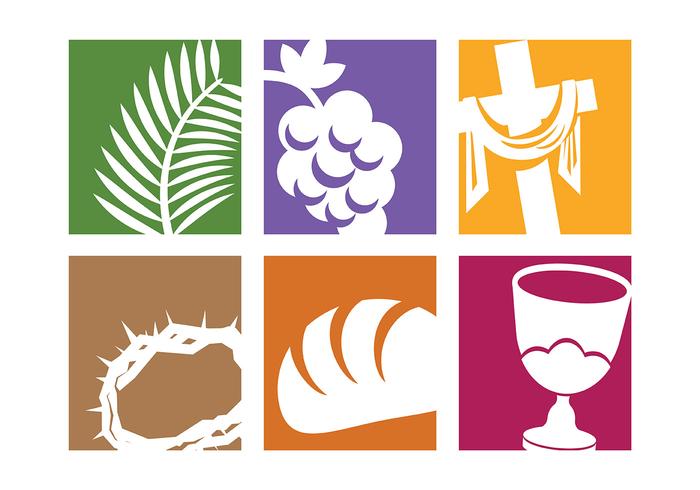
The divine drama of salvation unfolds most profoundly in the liturgies of Holy Week.
Here, God in Jesus Christ steps onto the stage of human history,
entering fully into its mess, its brokenness, its suffering,
not to avoid it, but to redeem it.
Palm Sunday serves as the curtain-raiser.
It introduces the protagonist, Jesus, yet leaves us with a haunting question
echoing through the Passion narrative:
“Who is Jesus?”
This question reverberates across three sacred scenes,
distinct, yet deeply intertwined:
- Holy Thursday
- Good Friday
- Easter Sunday
Each scene offers a response, not in abstract words,
but in embodied love.
Holy Thursday reveals a love that goes to the end.
It is a love made visible in the Lamb,
in the gift of the Eucharistic meal.
It is a love that kneels,
washing the feet of disciples,
a gesture of radical humility,
foreshadowing both suffering and forgiveness.
Good Friday deepens the revelation.
Here, love is not only spoken, but it is also poured out.
Blood, water, breath, everything is given.
Like a seed falling into the ground,
like a marathon runner collapsing at the finish line,
Jesus gives himself completely.
Love is carried to its furthest limit.
And yet, Easter proclaims that love has no limit.
The seed rises.
Life emerges where death seems final.
Love continues, transformed into mercy.
To those who abandoned him,
to those who betrayed him,
the Risen Christ returns,
not with judgment,
but with mercy.
This is our salvation:
love that endures,
love that dies,
love that rises,
love that forgives.
So again, we ask:
Who is Jesus?
He is the One whom God has raised from the dead.
The One given the name above every name.
He is the One who loves to the very end,
and in the Risen Christ,
we discover that there is no end.
His love is endless.

