We left Tui in the cool morning air,
wrapped for a while in a blanket of mist.
It walked beside us like a quiet companion,
then lifted and left us to the road.
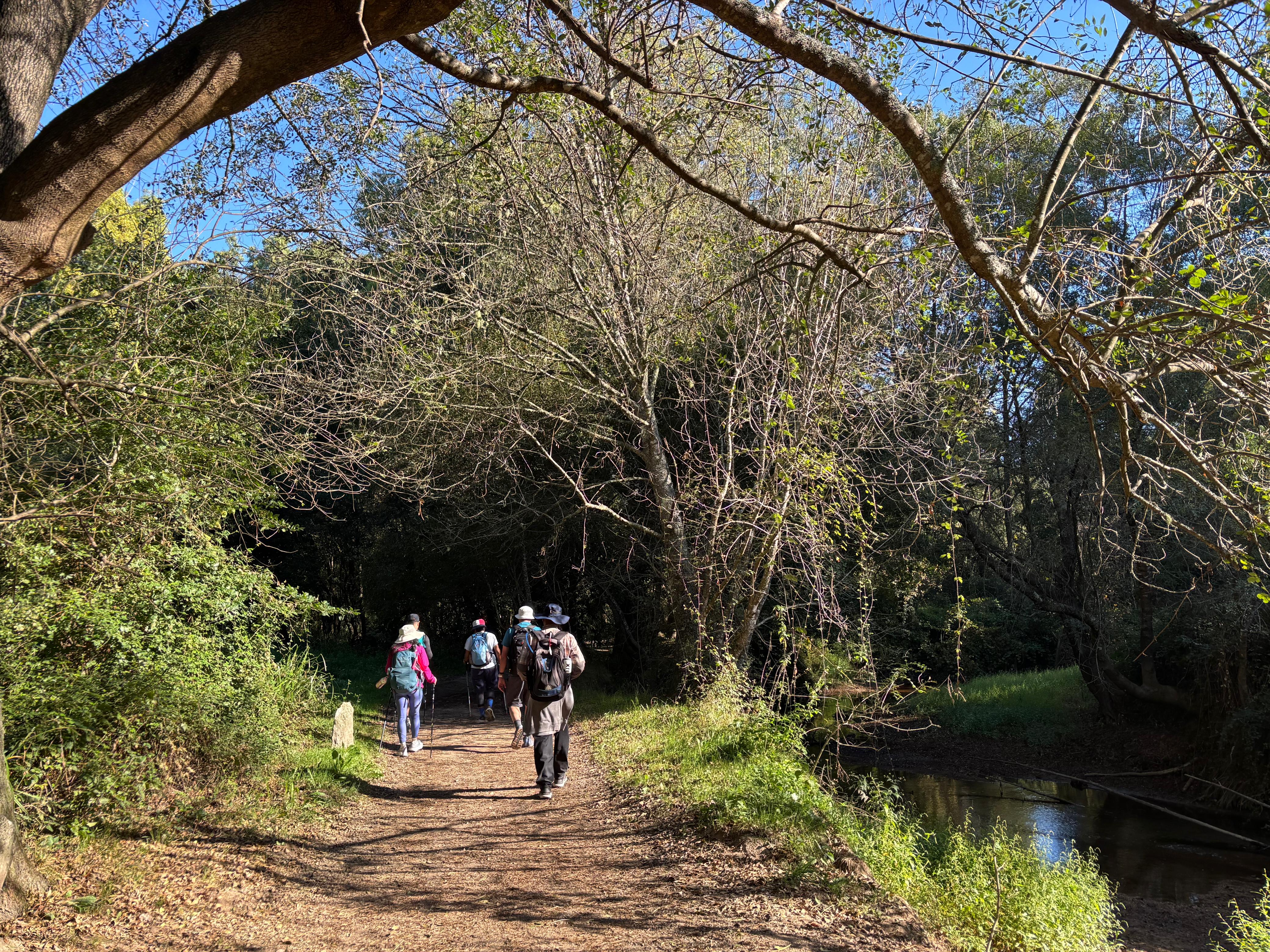
Our small group delved into conversation,
our words carrying us beyond ourselves.
So absorbed were we in one another
that we failed to notice the turning.
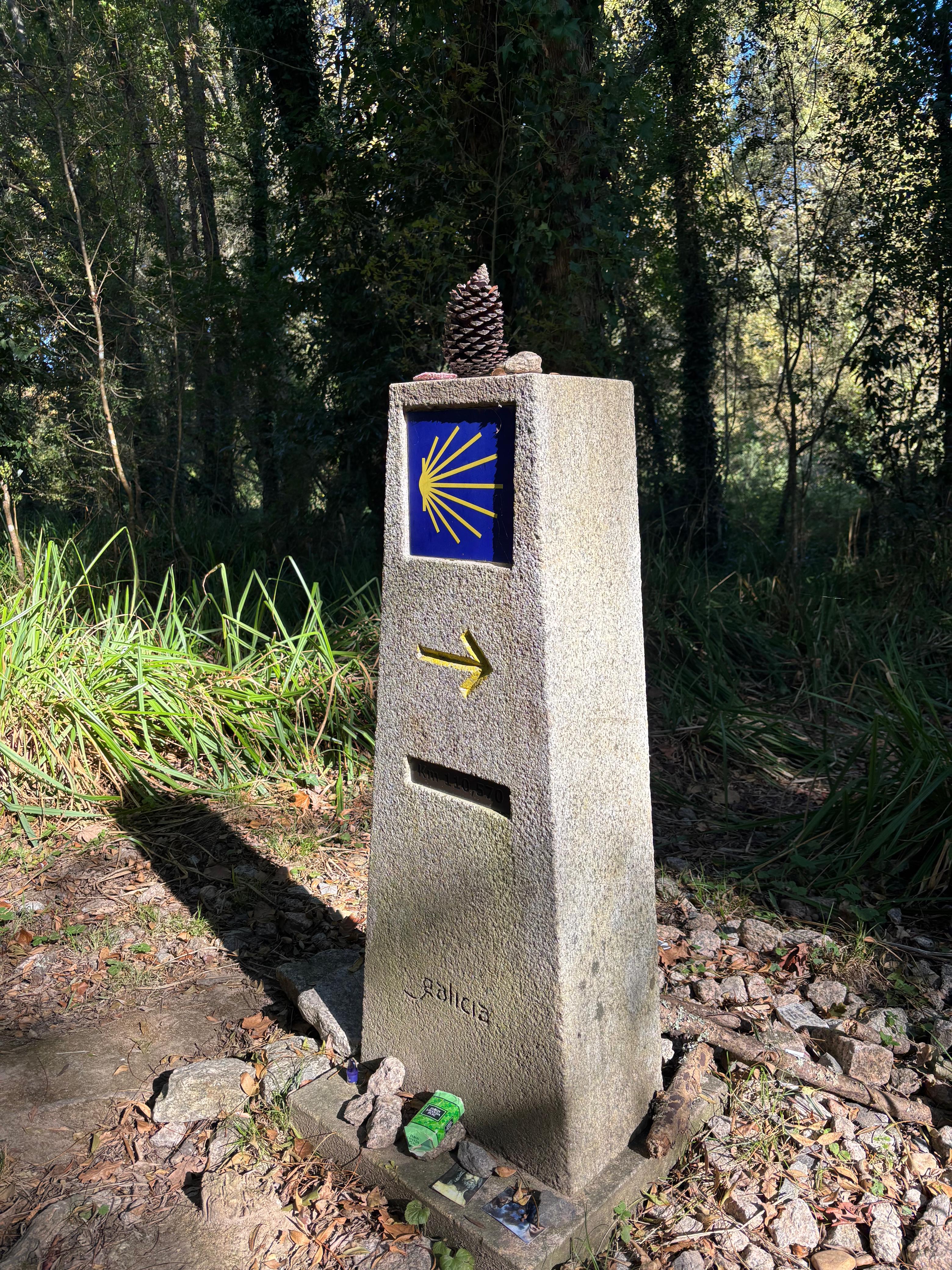
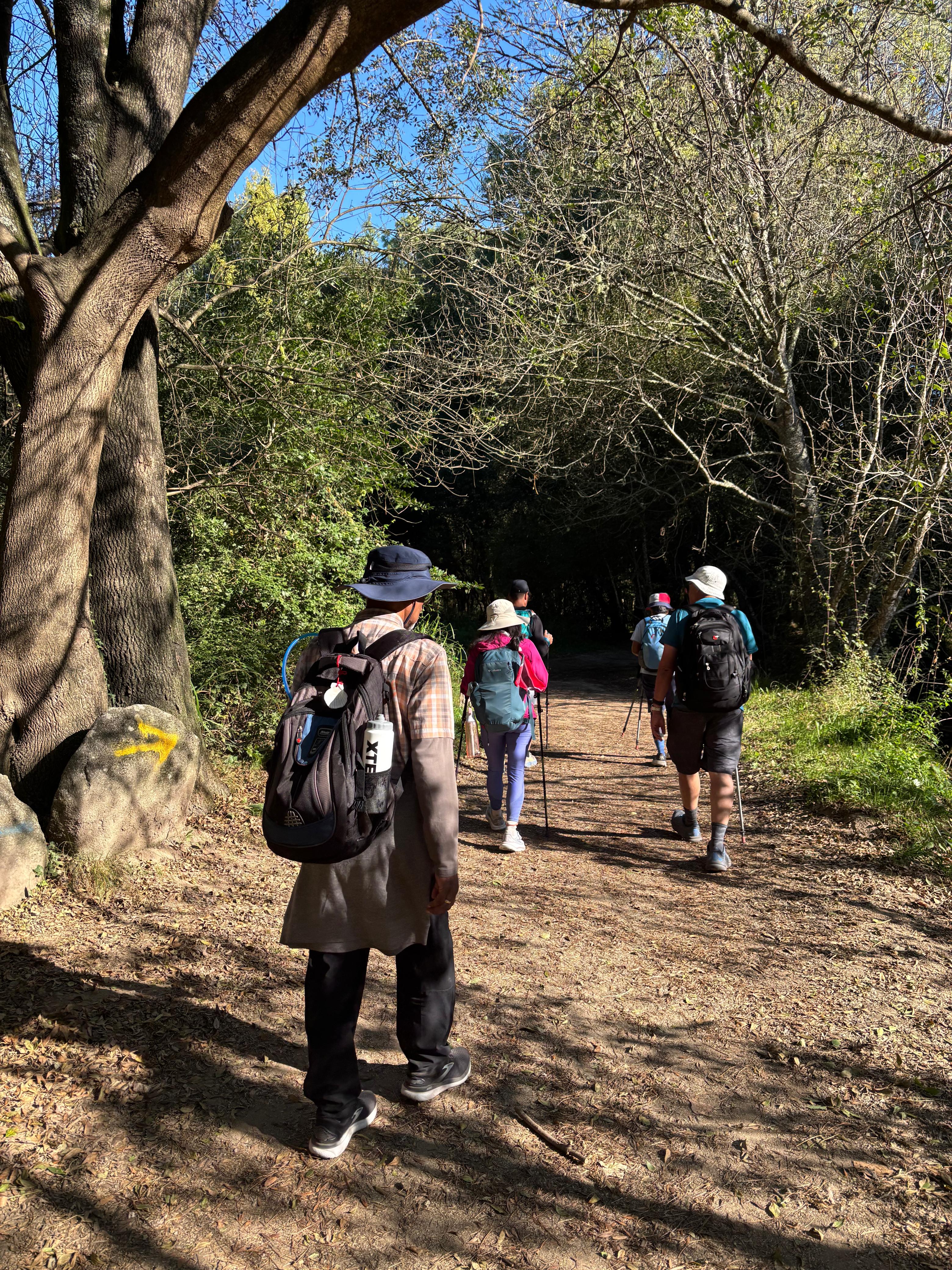
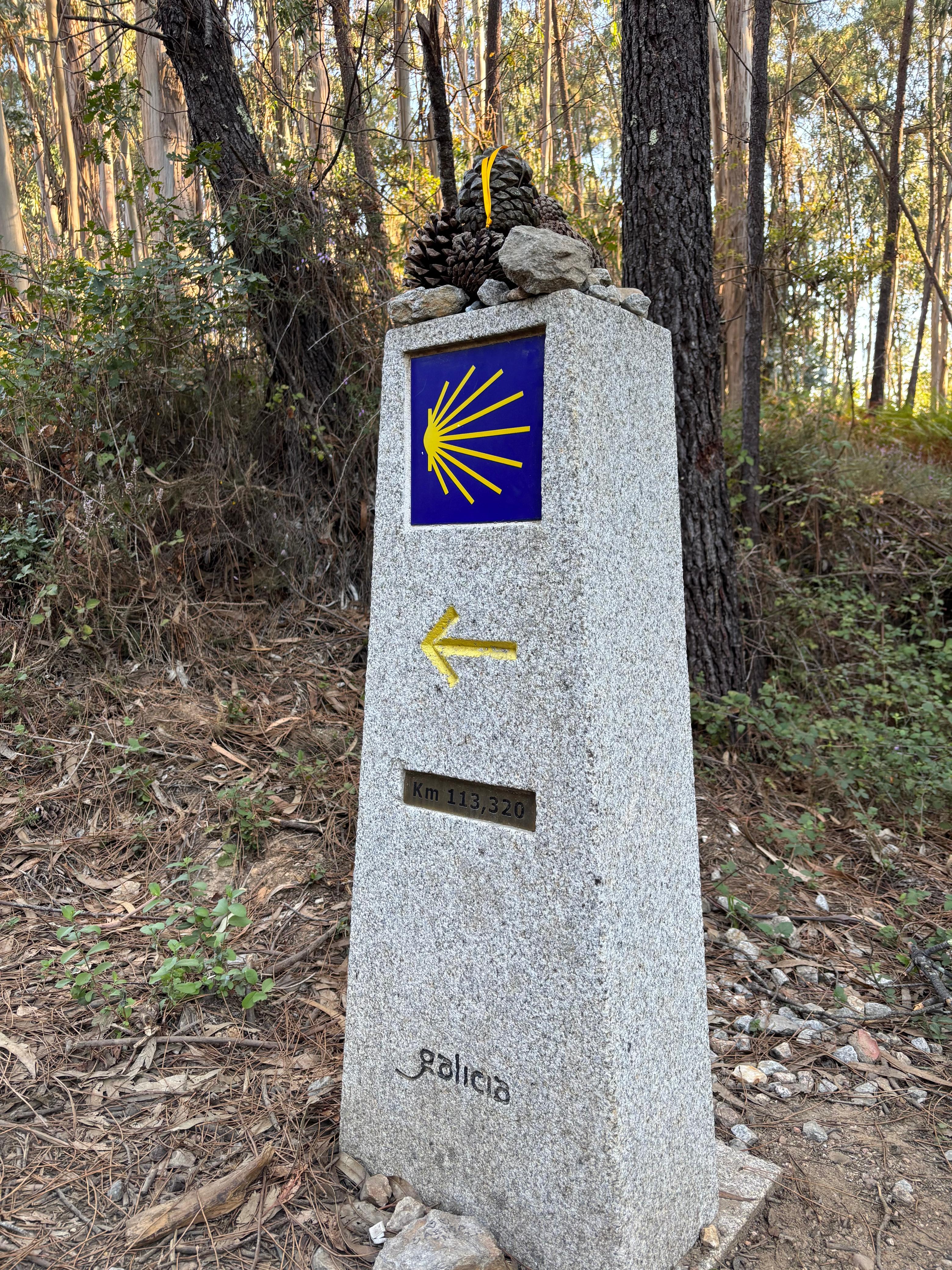
The yellow arrow waited in silence,
offering direction without demanding attention.
We continued along the wrong road
until voices behind us cried, “Wrong way!”
We stopped, turned, and found the path again.
One pilgrim named the lesson clearly:
when distractions blind us to the guiding arrows,
we can lose our way without realising it.
“Lord, how many arrows have I missed
while preoccupied with my own thoughts?
How often have You offered direction
through signs too ordinary to command me?”
“Give me eyes that remain attentive
even amid good conversation.
Teach me to listen to those beside me
without losing sight of where You are leading.”
Our conversations ranged widely:
from lawn tennis and the US Open
to the personal goals that had brought
each of us onto the Camino.
We spoke of life and retirement,
and the need to prepare for both.
Every stage of life has its own pilgrimage,
its own invitations to release and to receive.
We reflected on finding God
in the ordinariness of daily life—
in places without monuments or miracles,
where grace waits quietly to be noticed.
We shared stories of other pilgrimages
and the different roads that shaped us.
Each journey had left something behind
and carried something new into the present.
We marvelled at the community emerging
among people only recently brought together.
Strangers were becoming companions,
their lives woven together by the road.
We spoke of the legacies we hope to leave—
something deeper than possessions or titles,
a life that continues to touch others
through relationships shaped by love.
Yet some conversations felt very long.
Impatience began to stir within me;
intolerance whispered that I should withdraw
and seek refuge in my familiar shell.
The voice of fear offered isolation.
The voice of love asked me to stay.
I stayed within the conversations,
even when my attention grew tired.
Perhaps listening is also a pilgrimage:
a journey beyond my preferred pace,
into the world another person carries
and tries to put into words.
For nearly an hour, I walked alone.
Conversation gave way to creation,
and the Camino invited my senses
to receive what words had concealed.
I breathed deeply, allowing my nostrils
to welcome the molecules of fresh air.
Each breath came without being earned,
a quiet gift sustaining the next step.
Birds chirped from unseen branches.
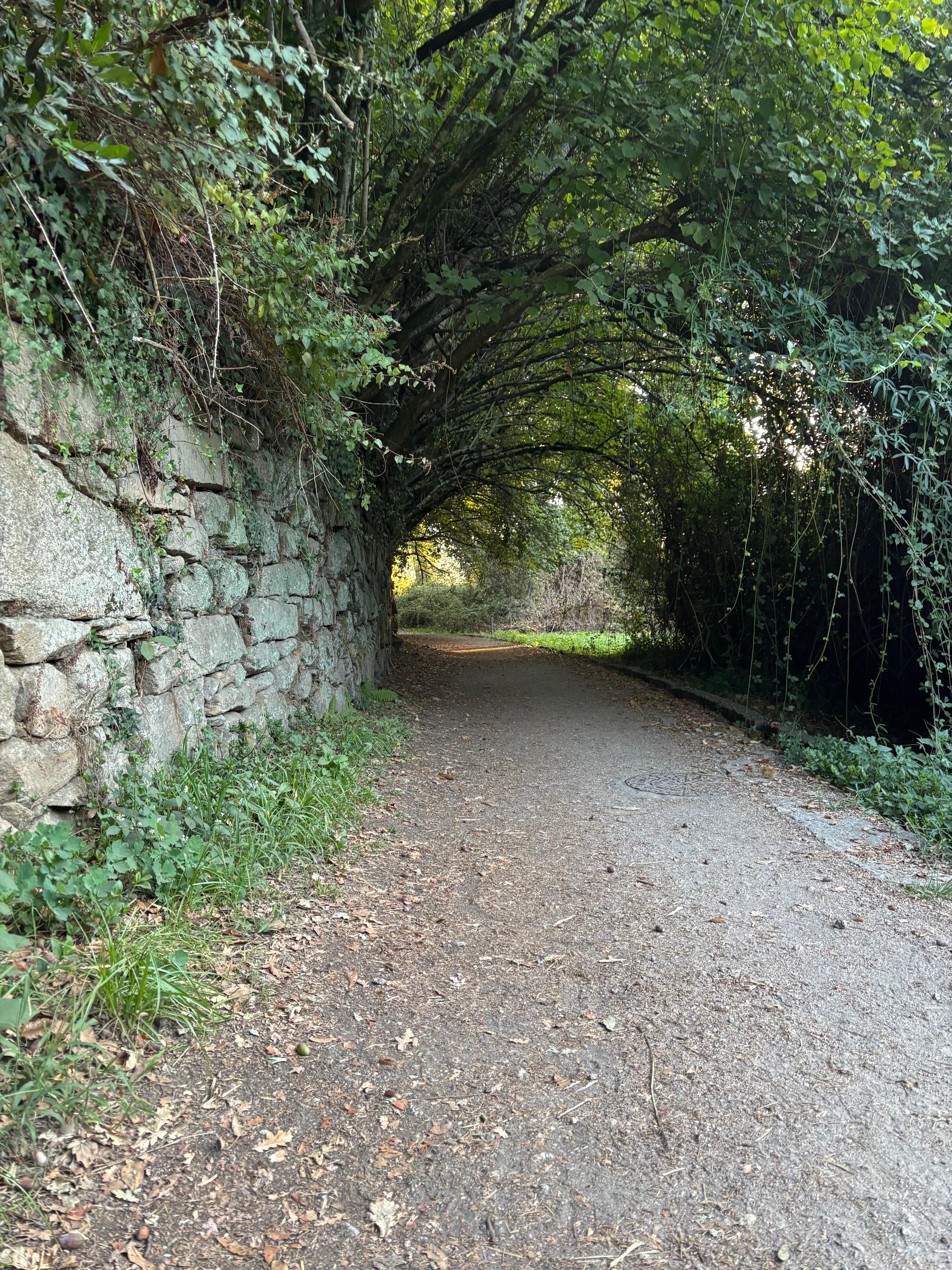
A slow-flowing river ran alongside the path.
The breeze caressed my skin,
and my body became a place of prayer.
Pilgrims of many ages passed before me,
each carrying a story I could not know.
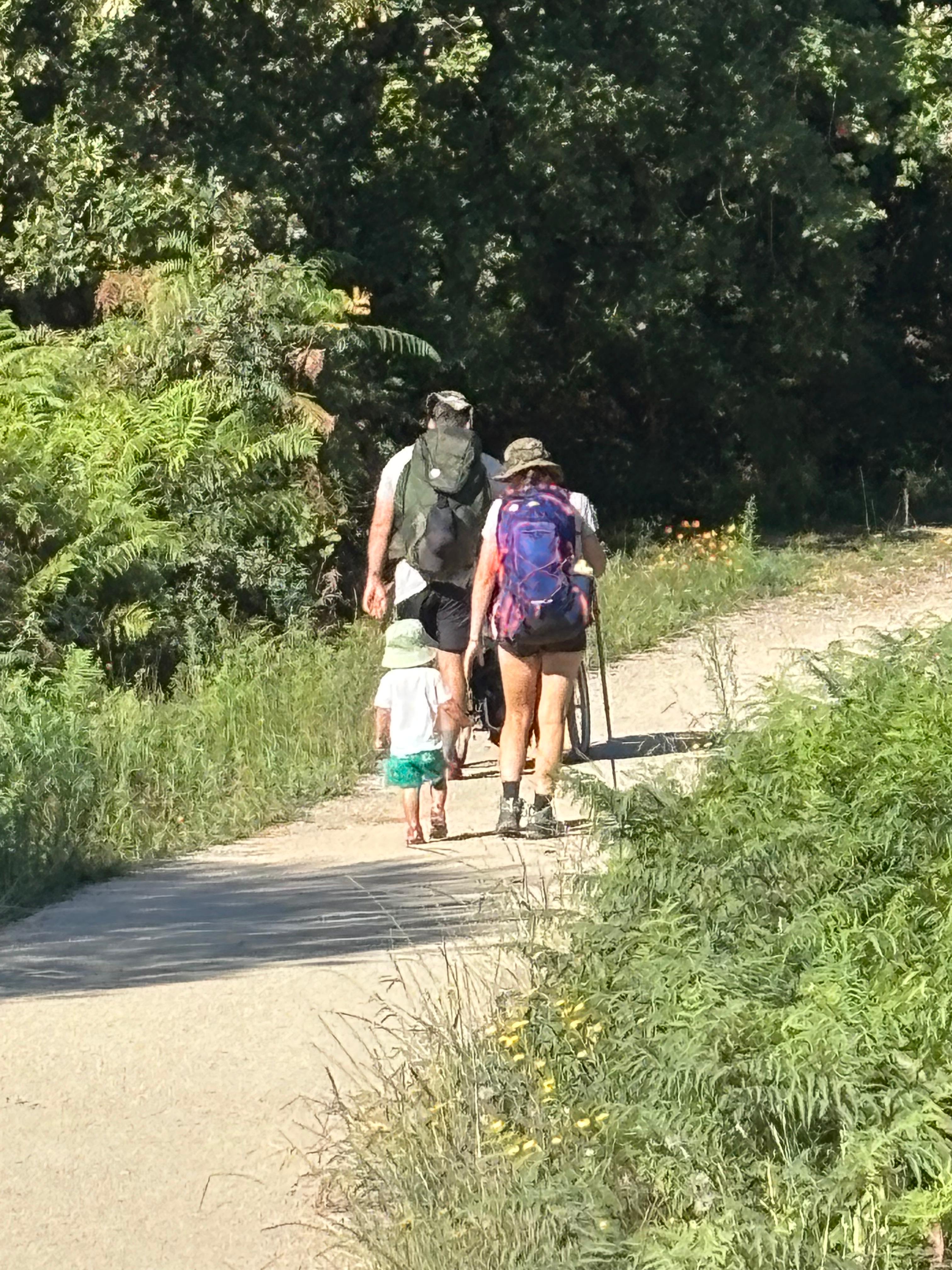
Among them walked a mother and father
with their nine-month-old child.
The child would not remember the route,
the distance, or the yellow arrows.
Yet the family carried the child forward,
held within a pilgrimage of love.
Perhaps this is how You carry me, Lord:
along roads I do not fully understand,
within a grace I may not remember,
towards a destination I cannot yet see.
The day’s walking felt easier,
cooler and kinder to my legs.
I arrived in O Porriño with joy,
grateful for a body less burdened by pain.
We ended the journey with Mass
at the Church of Santiago de Pontellas.
After many hours of walking the Way,
we gathered around Christ, who is the Way.
Outside, well-kept tombs encircled the church,
rising several levels above the ground.
The dead seemed gathered around the living,
silently sharing in our worship.
Life and death were not strangers there.
The church stood within their communion,
as though those who had completed the journey
were accompanying those still on the road.
I remembered the tradition of Juan Porro,
the medieval innkeeper associated with the town,
who offered travellers and pilgrims
food and rest along the Way of Saint James.
That ancient spirit of hospitality
seemed alive within our small hostel.
A family welcomed us with ordinary service,
each member offering a different gift.
The son became a driver, bartender and waiter,
welcoming us with warmth and gracious English.
His father served as chef and porter;
his mother worked quietly behind the scenes.
Like Martha, she remained partly hidden,
yet her care was present in everything.
The meal, the service and the welcome
became another sacrament of the road.
Hospitality left its own yellow arrows:
a prepared table, a carried bag,
a journey made easier by another,
and weary pilgrims treated as friends.
Later, another form of hospitality was required—
the opening of truth between roommates.
I spoke honestly about actions
that had caused me discomfort.
I tried to speak without accusation,
expressing my concern about the actions
while also asking what deeper struggle
might have been giving rise to them.
My roommate responded honestly,
revealing something of his personal struggle.
His vulnerability invited my empathy
without silencing the truth I needed to express.
We made room for both realities:
his struggle and my discomfort,
his experience and my boundaries,
and compassion and honest speech.
Perhaps this too was a guiding arrow—
the courage to enter a difficult conversation
and to trust that truth, offered with love,
could restore a relationship to the Way.
“Lord, keep me attentive to Your arrows:
those painted on walls and stones,
those spoken by companions,
and those hidden in my unease.”
“When conversation becomes tiring,
give me the love to remain present.
When silence calls, give me the freedom
to walk alone and to receive creation.”
“When truth needs to be spoken,
free my words from blame and accusation.
Make my heart hospitable enough
to hear the struggle within another.”
I arrived in O Porriño understanding
that the Way is marked not only by arrows
but also by attention, hospitality and truth—
the signs that lead us home to one another.