I left O Porriño in the morning chill,
carrying a coldness within me.
My mood imitated the air—
quiet, heavy and slow to awaken.
Morning blues travelled in my body.
Energy had not yet found my limbs,
and part of me wanted to retreat
until I felt ready to join the day.
But pilgrimage does not always wait
for the body and spirit to agree.
Sometimes the road begins
while parts of us are still asleep.
The challenge was not to deny my feeling,
or force myself into borrowed cheerfulness.
It was to receive the morning honestly
without withdrawing from the community.
I told some companions what I needed.
They already knew I was not a morning person.
They respected the quiet around me
and allowed me space without abandoning me.
Later, when my energy finally appeared,
one pilgrim laughed and announced,
“He is alive! He is awake!”
The community welcomed both versions of me.
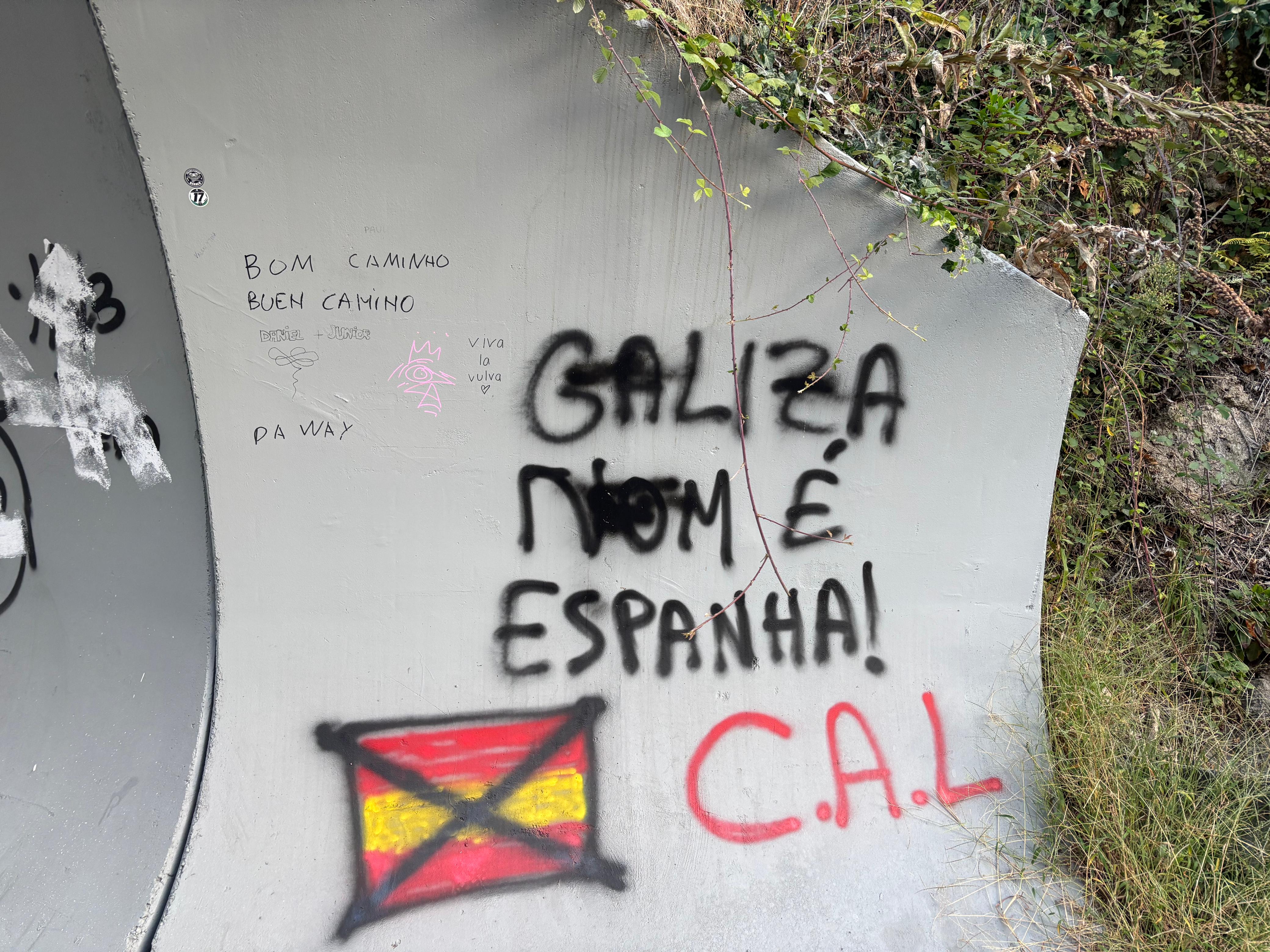
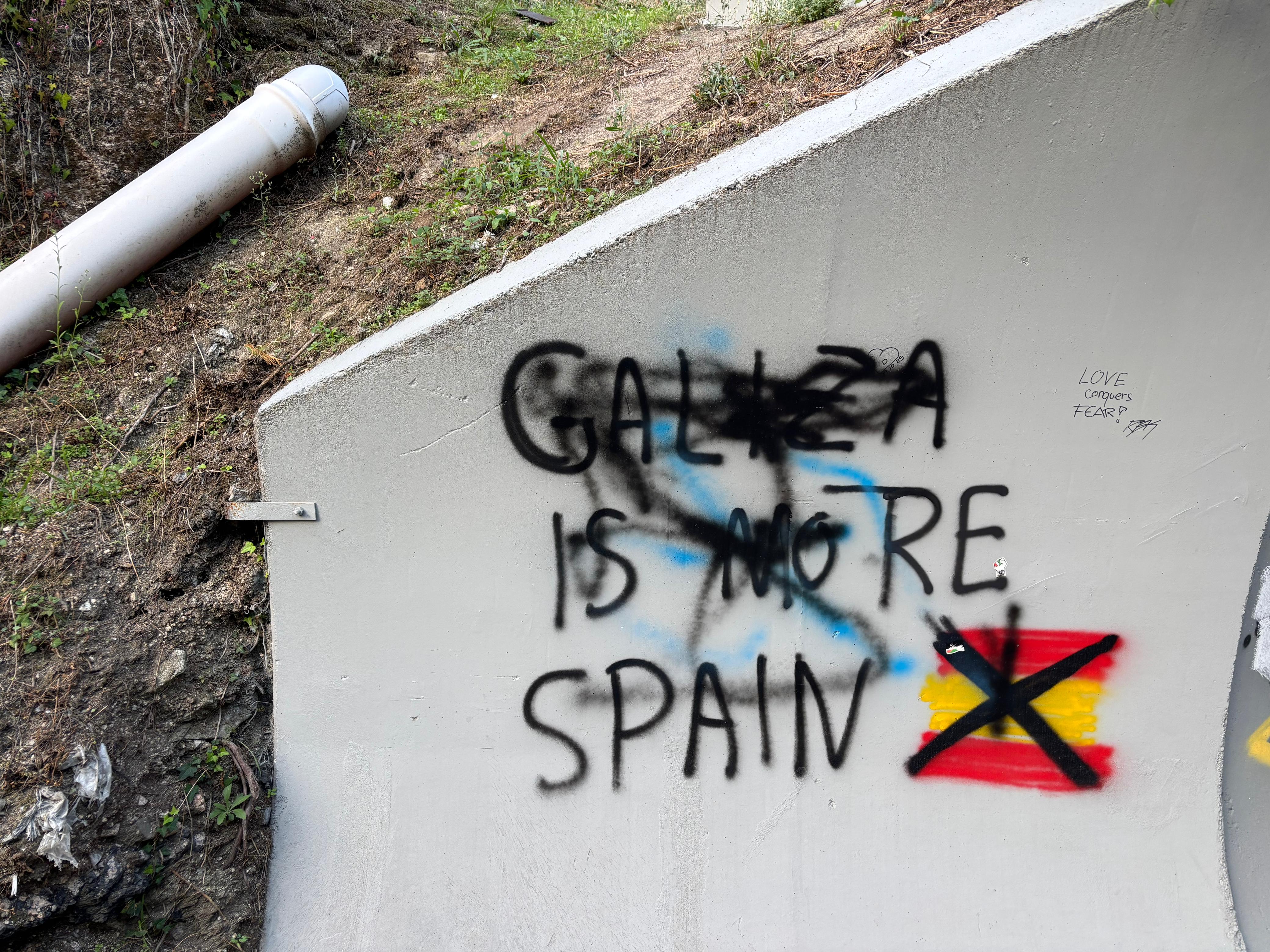
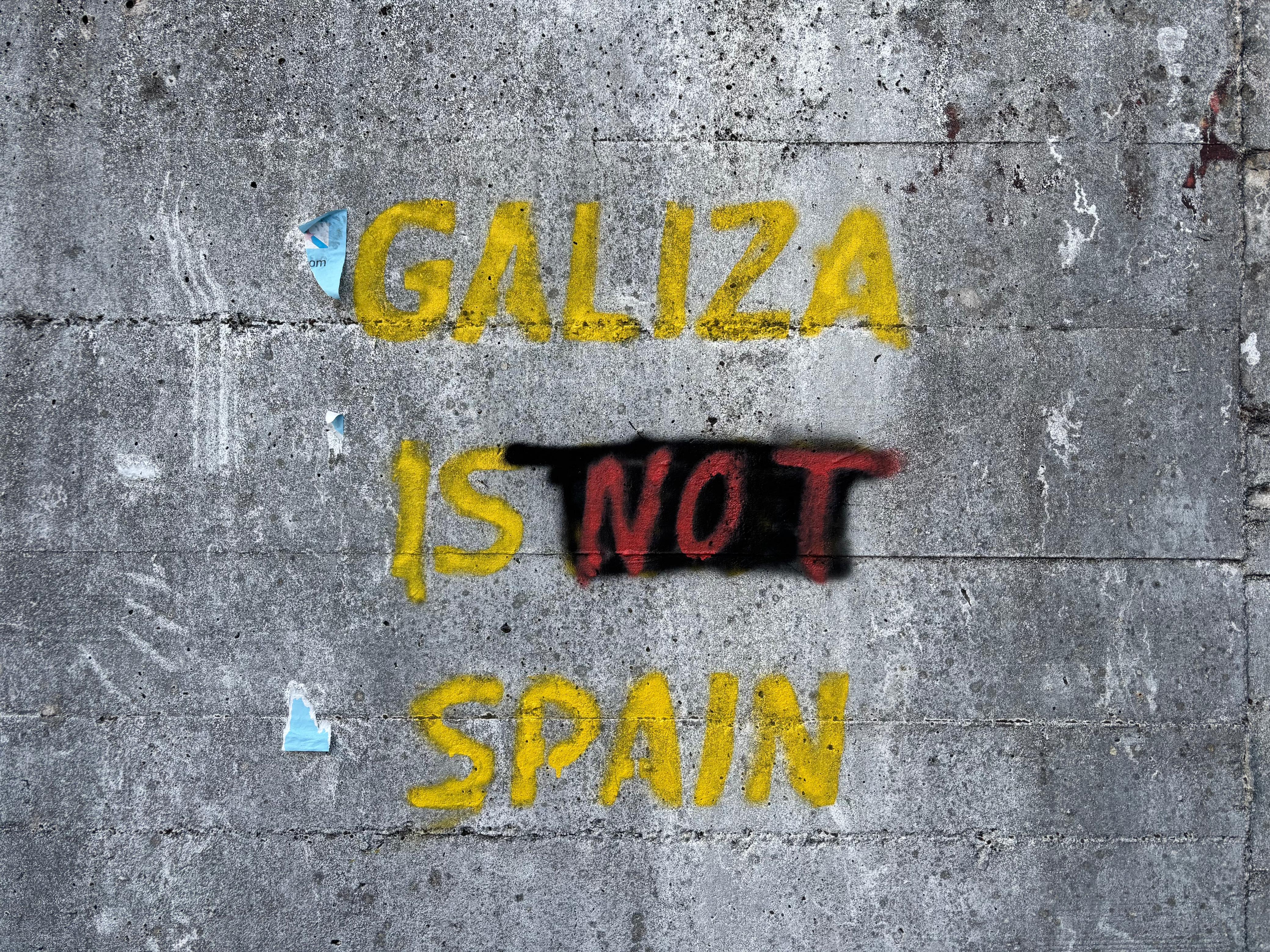
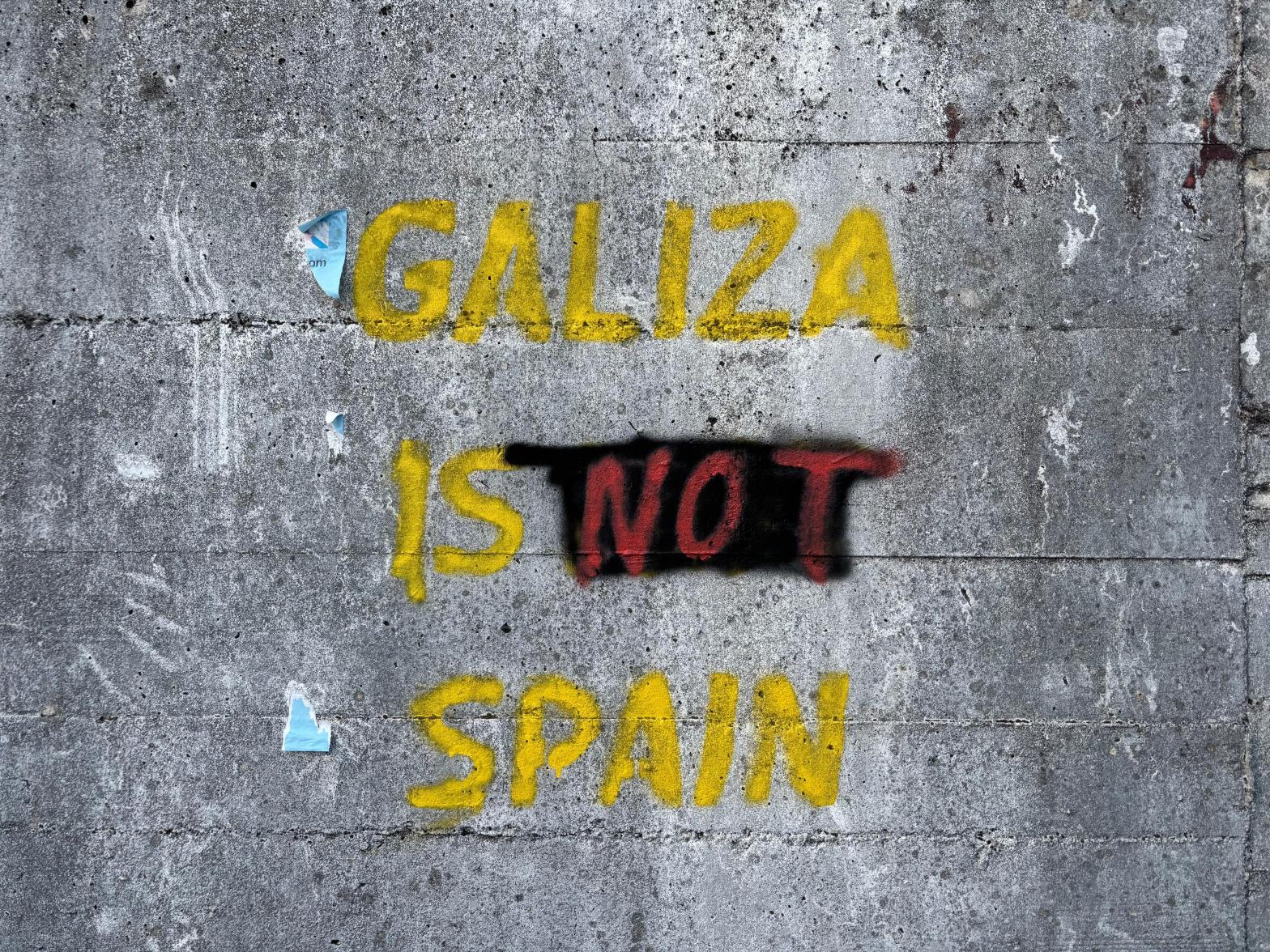
Along the road, colourful graffiti
spoke from walls and buildings.
“Galiza is not Spain,” one declared,
claiming an identity that resisted another name.
Another message offered a competing voice,
partly covered by black paint.
Political convictions met upon the wall,
each refusing to disappear quietly.
The Camino held these differences
without erasing their tension.
It became a road spacious enough
for protest, belonging and contradiction.
Pilgrims also carried different convictions,
languages, cultures and reasons for walking.
The Way received us without first demanding
that our stories resemble one another.
I walked beside a Trini-Canadian pilgrim
and listened as he unfolded his life.
Nearby, a British woman was sharing
her story with one of my companions.
Afterwards, I asked to hear
the heart of what she had shared.
Two lives from different worlds
revealed a striking point of connection.
Both stories carried broken arms—
the body holding what words remembered.
Different people had entered the Camino
through strangely similar doors of pain.
The road did not repair their histories.
It offered a place for them to be received.
A story listened to with reverence
became another form of companionship.
In one village, a local person walked
while reading a physical newspaper.
The sight seemed almost ancient
within our hurried digital age.
Paper moved softly between his hands
as pilgrims passed with phones and watches.
The Camino made room for both—
the old and the new sharing one road.
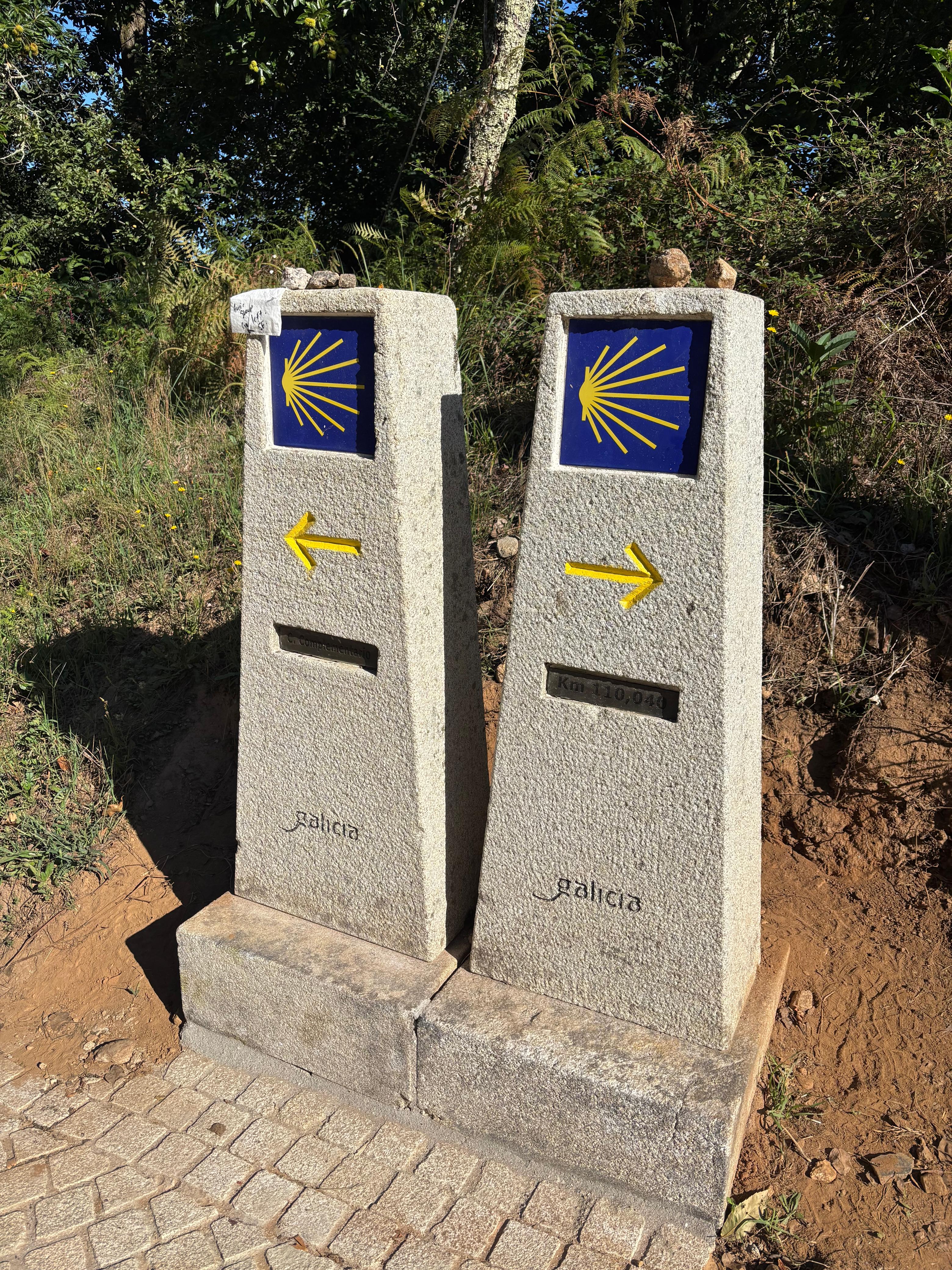
Then we reached a confusion of signs.
One pointed towards the usual Camino;
another marked a temporary diversion,
while others pulled our attention elsewhere.
For a moment, direction became uncertain.
We had to stop and look closely,
separating the true guiding sign
from the arrows that led elsewhere.
“Lord, the cave of my heart
also contains competing directions.
Fear, ego, love and grace
each claim to know the way.”
“Teach me to pause before choosing.
Give me the patience to discern
which arrow leads towards greater life
and which merely promises an easier road.”
Near Redondela, I left my subgroup
and began walking quickly ahead.
My mind fixed itself on reaching the centre
and finding somewhere to eat.
Another group called as I passed,
but their voices did not reach me.
They later said I seemed intensely focused.
They were right: the destination had consumed me.
My focus helped me move forward,
but it also made me temporarily deaf.
I was following the road
while failing to hear the people upon it.
How easily purpose becomes a tunnel,
narrowing the world around me.
I can reach the place I intended
and miss the encounters along the way.
In Redondela, I met José from Puerto Rico,
a retired member of the United States military.
Our conversation offered two lessons
that continued walking beside me.
“We are guaranteed today, but not tomorrow.”
We may plan carefully for what lies ahead,
yet tomorrow remains a gift
that no pilgrim can demand.
José also spoke of what he once believed
was necessary for a full life—
cars, houses, property, clothing, jewellery
and the security of accumulating more.
The Camino had reduced his possessions
to what could fit inside one backpack.
What he truly needed for the journey
was already resting upon his shoulders.
I looked again at my own backpack.
Its limited space had required decisions:
what was necessary, what was useful,
and what could safely be left behind.
Perhaps the inner Camino asks the same.
What burdens have I named essential?
What am I carrying from habit or fear
that no longer helps me walk towards God?
Palestinian flags appeared along the route—
painted on walls and hanging from windows.
They were public gestures of solidarity,
refusing to let suffering become invisible.
The Camino that receives every story
must also make room for wounded peoples.
Pilgrimage cannot become an escape
from the cries of the human family.
As I climbed a steep incline,
pain returned to my knee.
The remaining road suddenly felt uncertain,
and José’s words came back to me.
“Tomorrow was not guaranteed.”
Neither was my ability to walk every stage.
I could only receive this day,
this hill and this present step.
One day at a time.
One incline at a time.
One painful movement offered to God,
without trying to possess tomorrow.
At the hotel in Arcade, my roommate
spoke of his own difficult ascent.
Exhaustion had overcome him,
and he was forced to stop.
His closest companions gathered around him.
They attended to his medical needs,
ensured that he rested
and refused to continue without him.
They adjusted themselves to his pace,
walking beside him towards the hotel.
For him, their care became
a profound spiritual experience.
The sacred appeared through ordinary hands:
someone observing, someone responding,
someone surrendering speed and schedule
so that another would not walk alone.
Perhaps this is the treasure of the Camino—
not proving that we can endure the road,
but becoming a people willing
to carry one another through it.
“Lord, make me more compassionate
when another person enters a crisis.
Slow my judgment and awaken my mercy,
especially when our relationship is difficult.”
“Teach me to receive each person
as the Camino received us today:
with our competing convictions, broken stories,
weariness, pain and unfinished conversion.”
“When my mood is cold,
help me communicate rather than disappear.
When my energy returns,
let me re-enter the community with gratitude.”
“When I become fixed on a destination,
keep my ears open to those calling.
When the signs become confusing,
teach me to pause and discern.”
“When tomorrow fills me with anxiety,
return me gently to today.
Remind me that all I truly possess
is this breath, this step and this grace.”
I arrived in Arcade carrying less certainty,
but a deeper knowledge of the Way:
the road receives every pilgrim,
and asks us to receive one another.
That evening, we gathered around a pilgrim
to celebrate the gift of his birthday.
We sang, cut the cake and shared our joy
within the restaurant of our hotel.
Then pilgrims seated at nearby tables
joined our song without invitation.
The Camino widened our circle once again—
“Lord, help us carry this welcome out of the cave.